

In the coming days, one of the Israeli Air Force’s two Apache attack helicopter squadrons was set to be shut down under a General Staff decision made early in the past decade — a move that would have cut the Air Force’s attack helicopter fleet by more than half. That decision was canceled during the war, and the Air Force is now working to expand the array. In recent days, the Border Defense Division, which did not exist before October 7, has been engaged in purchasing new helicopters from the United States — Apache Echo models.
At the same time, the Air Force is completing a major overhaul aimed at dramatically improving close air support for regional brigades across Israel’s various security sectors, in preparation for a sudden event simulating a large-scale infiltration by hundreds or thousands of terrorists. New operational orders have already been set. If a formation of fighter jets is en route to a mission in Syria or Iran and an infiltration-stopping order is unexpectedly activated, all missions will be halted and the aircraft diverted to the threatened sector. The reform is overseen by a special control administration operating from Air Force headquarters.
Documentation of the activities of ground and air forces maneuvering in Gaza and Syria
(Video: IDF Spokesperson)



The new order governing aerial operations is called ‘Thunder.’ It will replace the ‘Parash Pelashet’ order declared at 6:37 a.m. on October 7, 2023, by then, Gaza Division commander Brig. Gen. Avi Rosenfeld. ‘Thunder’ will be uniform across all sectors. Any regional division commander may activate it if they determine that the invading force exceeds their defensive capabilities.
As part of the changes, minimum readiness levels for surprise infiltration scenarios have increased 2.5-fold, including attack helicopters, transport helicopters for moving forces, drones and fighter jets. Armament loads have risen sharply. Whereas a pair of fighter jets on routine alert previously carried 16 munitions, aircraft on basic alert today carry about 60 munitions of various types. The Air Force said that “each fighter jet on routine alert now carries 12 to 15 bombs for an initial strike within minutes of takeoff, including inside our territory, based on advance analyses conducted with the divisions.”
Predefined target banks — including inside Israel
Aircraft tasked with air defense, which typically carry air-to-air missiles, now also carry heavy bombs. Every aircraft scrambled to a sector facing an infiltration is assigned predefined targets prepared in advance by the relevant division or regional brigade. These typically include estimated entry routes, key junctions the enemy is expected to seize and other objectives — reflecting the October 7 scenario.

4 View gallery
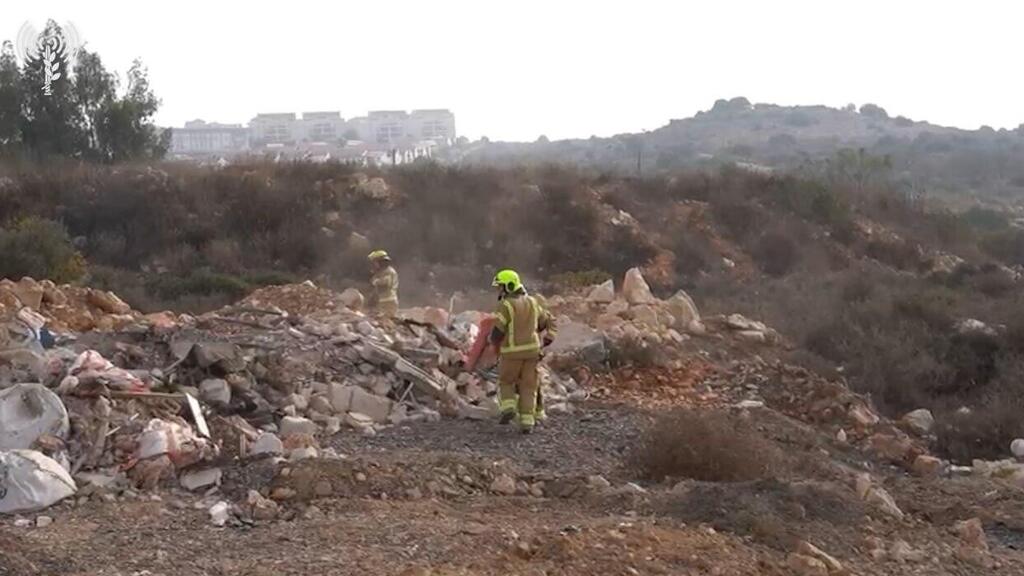
The pilots' communications were also trained to talk to civilian officials
(Photo: IDF Spokesperson)
Company and battalion commanders in security sectors have been trained to use predesignated alternate routes to reach combat zones to avoid friendly fire. These are “disruption strikes,” allowing aircraft to operate and strike immediately even without ground directives, under the assumption that an invading force will attempt to cripple command and control and neutralize local commanders first. The scale of aerial forces envisioned was demonstrated in a drill simulating an infiltration from Jordan toward the Jordan Valley and the West Bank: 160 aircraft and helicopters operating at 40 locations in a two-division exercise.
Coordination between the Air Force and regional divisions has tightened to the point that fighter jets and attack helicopters now have predefined targets inside Israeli communities to disrupt terrorist activity if a similar scenario unfolds. In communities along the confrontation line — from Ein Zivan in the Golan Heights to Kedumim in Samaria — quarter-ton bombs could be dropped, based on the assumption that residents would be alerted and sheltering in safe rooms 200 to 300 meters away. In the West Bank alone, about 100 such targets have been marked in advance inside or near communities.
An IDF study analyzing key battles in world wars and the First Lebanon War found that in 73% of cases, enemy movement was disrupted when the defending side bombed estimated infiltration routes.
Civilians first
In the absence of effective command and control during the critical first hour of an infiltration, pilots will be instructed to prioritize assistance independently according to a preset order. Protecting civilians comes first, followed by safeguarding IDF bases housing command and control, then defending military outposts and only afterward addressing breaches in the border fence. Some aircraft, mainly fighter jets, will be preassigned to bomb specific border areas to halt an incursion.
Fighter pilots will also be instructed to conduct low-altitude intimidation flyovers using flares and sonic booms, with damaging effects subject to authorization and non-damaging effects allowed without it. Attack helicopter pilots and drone operators, who have better ground visibility, will be authorized to strike suspects without waiting for ground approval, using discretion and often preceded by warning fire with lighter munitions. Such dilemmas — including fears of misidentifying IDF forces or armed civilian rapid-response teams — delayed strikes against Nukhba terrorists on October 7.
Some forces, particularly local security coordinators and rapid-response teams, have already been issued ‘Netz’ systems that act as location beacons, enabling aerial forces to identify them as Israeli security personnel. As part of the reform, about 1,000 helicopter landing zones have been established nationwide, mainly near borders and in the West Bank.
Force diversion before medical evacuation
Another change concerns authority to deploy elite hostage-rescue units. Before October 7, approval rested with the Operations Directorate. Now, a ‘Thunder’ declaration by a division commander automatically triggers an airlift to the nearest landing zone. Five helicopters with standby teams have been assigned to the five regional commands.
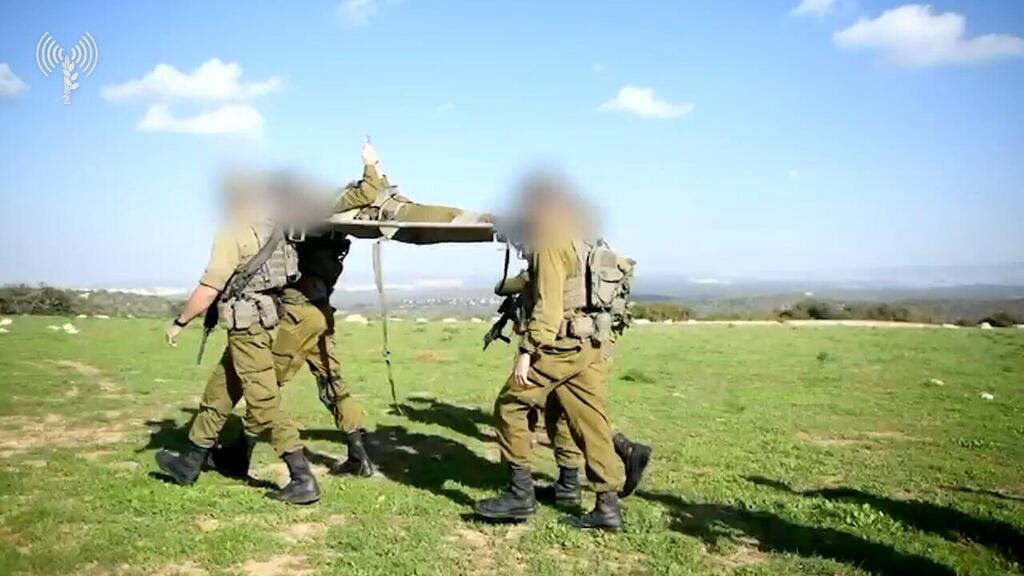
Priorities for using transport helicopters such as Black Hawks and Yasur have also been revised. In a sudden infiltration, they will first ferry combat forces and only afterward evacuate wounded, based on the assumption that existing ground forces, civilians and medics can provide lifesaving initial care.
A further innovation involves decentralizing decisions on aerial fire. Assuming command and control may collapse in the early hours, aircrews are expected to operate effectively without a full situational picture. To that end, combined aerial combat teams have been formed, modeled on ground combined battalion teams. Each will be led by a formation commander — an attack helicopter pilot or drone operator — who will assign missions if none are received from the ground.
Dedicated border defense control cells have been established at Air Force headquarters and in regional commands. “In routine operations, readiness teams conduct the kinds of strikes we see daily in Lebanon,” the Air Force said. “In emergencies, they will enable aerial fire in an infiltration scenario without warning.”
Pilot communications with ground forces have been adapted to simple conference calls linking the IDF, emergency medical services, police and aircrews, saving dozens of minutes in real scenarios, including helicopter evacuations in the West Bank this year. The Air Force decided to install phone systems in helicopter pilot helmets.
“We feel the change and the joint work with the Air Force in every operation in the West Bank,” said an officer from the West Bank division. “Aerial fire is now part of advance planning, and brigade-level strike cells are in place. In every attack, helicopters or drones are scrambled to join the pursuit, and under a ‘Thunder’ order, fighter jets are also prepared in advance to help isolate attacked communities.”